China Top Front Door Replacement Manufacturers and Suppliers
Choosing a reliable front door replacement manufacturer in China requires more than comparing prices or browsing polished catalogs. The right supplier should understand entrance security, weather exposure, thermal performance, and installation conditions. Experienced manufacturers often offer steel, aluminum, fiberglass, and solid wood doors for apartments, villas, offices, and commercial buildings. Each material behaves differently under sunlight, rain, humidity, and daily use.
Details matter.
A dependable supplier should explain panel structure, frame thickness, hardware quality, sealing systems, surface treatment, and available dimensions. Factory photographs, production samples, technical drawings, and consistent communication can reveal more than a sales promise. Buyers should also review quality-control procedures, packaging methods, lead times, warranty terms, and export experience. Independent testing or recognized certifications may support claims, but documents should be verified for the exact product model. Standards and building requirements also vary by market.
No supplier is perfect. Some companies provide excellent doors but limited customization. Others offer attractive designs while overlooking installation support. This is where careful questions become valuable. Ask how the door performs after repeated opening, temperature changes, and transportation. Request a sample when the project allows it. A small color difference or loose seal may seem minor, yet it can become expensive later. Supplier rankings can provide direction, not certainty. This guide introduces leading China front door replacement manufacturers and suppliers, while encouraging practical comparison, documented evidence, and honest evaluation before any purchase decision.
Types of Front Door Replacements Available in China
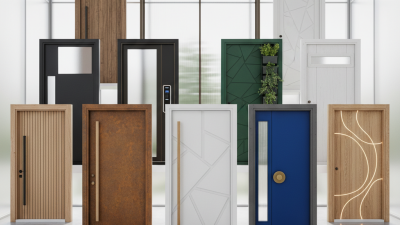
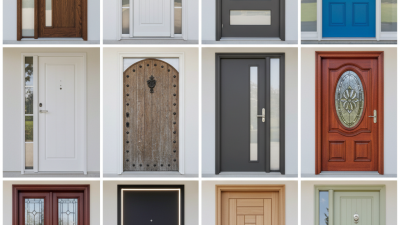
China’s front door replacement market offers several options for different homes and climates. Steel doors are common in apartments and urban homes. They provide a firm feel and can include insulated cores to reduce heat transfer. Aluminum doors resist corrosion and suit humid coastal areas, though thermal breaks matter in colder regions. Solid wood doors bring natural grain and a warmer appearance. They need regular care, especially where rain and strong sun reach the entrance.
There are more choices. Fiberglass doors can imitate wood grain while requiring less routine finishing. Composite doors combine materials to balance insulation, strength, and appearance. Buyers may also find security doors with reinforced frames and multi-point locking systems. Check the complete unit, not only the door leaf. Frame depth, hinge placement, threshold height, and opening direction affect installation. A poorly measured frame can leave gaps that invite drafts or water. That happens.
Glazing is another practical variation. Narrow insulated glass panels can bring daylight into a dim hallway, while frosted glass offers more privacy. Ask suppliers about finish samples, hardware, and local weather performance. Specifications can differ between models, even within one material category. A small detail, such as a low threshold, may improve access but needs careful weather sealing. I would verify measurements twice; replacement work is not always as straightforward as catalog photos suggest.
China Front Door Replacement Options: Common Nominal Widths
Replacement doors in China are available in different materials and styles, including steel security, timber, aluminum, and composite doors. The chart shows commonly encountered nominal door widths in millimeters; actual sizes vary by building and manufacturer.
Measure the existing door leaf and frame opening before ordering. Nominal width alone does not confirm fit; height, frame dimensions, and opening direction should also be checked.
Leading Manufacturing Regions and Production Capabilities in China
China’s front-door production is spread across several manufacturing clusters, each with different strengths. Zhejiang, particularly the Yongkang area, has a long-established base for metal doors and hardware. Factories there commonly work with stamped steel panels, reinforced frames, powder-coated finishes, and multi-point locking preparations. Guangdong suppliers often focus on aluminum entry systems, glass combinations, and made-to-order sizes for varied architectural styles. Their access to component networks can help with finish and hardware options.
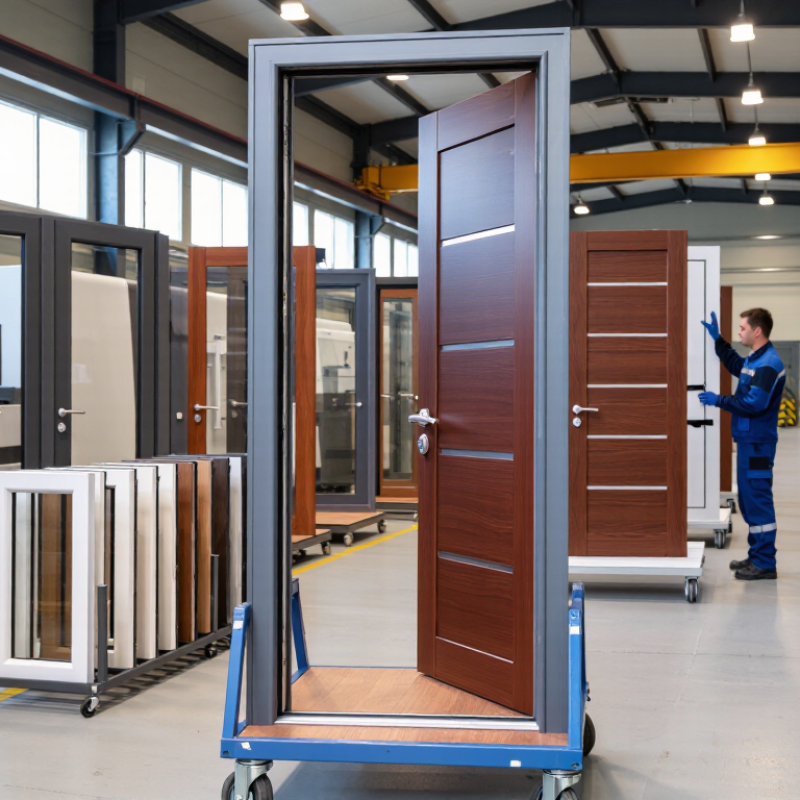
Production capabilities vary from workshop-based fabrication to automated cutting, pressing, welding, and coating lines. Buyers should ask how a supplier checks frame dimensions, surface consistency, and hinge alignment; these details affect installation more than a polished catalog suggests. Some manufacturers can provide sample sections or inspection photos before shipment. That helps, though it does not replace a clear specification.
Regional strengths are not guarantees. A capable factory still needs accurate drawings, agreed tolerances, and realistic lead times. In practice, small measurement changes can cause delays. This part is easy to underestimate. Confirm the opening direction, wall thickness, finish, and packing method in writing, then compare the quoted production scope with the actual site conditions.
Quality Standards, Customization, and Material Options
For buyers comparing China-based front door manufacturers and suppliers, quality starts with documented testing, not a polished sample. Ask for the applicable test standard, test size, hardware configuration, and recent results for air leakage, water penetration, wind resistance, and thermal performance. GB/T 8478-2020 covers aluminum alloy doors and windows; it should not be treated as a universal test for every door material. For export projects, request performance evidence relevant to the destination market. The 2022 Global Status Report for Buildings and Construction estimates that buildings accounted for 34% of global energy demand and 37% of energy- and process-related CO₂ emissions. A door is only one part of that picture. Still, poor seals can undermine an otherwise efficient entrance.
Customization should be specified in measurable details: rough-opening dimensions, frame depth, threshold height, handing, glazing area, finish, and lock preparation. Request a full-size corner sample or production mock-up when profiles and finishes matter. Small gaps show. Material choice changes maintenance and performance: steel offers a sturdy skin, fiberglass can imitate wood grain, and solid wood brings natural variation but needs careful moisture control. Ask suppliers how they test finishes, protect edges, and package doors for long-distance shipping. A specification can look complete and still miss the installation conditions. That is worth admitting. A clear checklist, batch records, and inspection photos make comparison more reliable than promises alone.
How to Select and Purchase from a Chinese Door Supplier
China Top Front Door Replacement Manufacturers and Suppliers
How to Select and Purchase from a Chinese Door Supplier
Selecting a Chinese door supplier starts with a clear project specification. Record the opening width, height, wall thickness, swing direction, and required finish. Ask whether the quoted price includes the frame, locks, hinges, seals, and packaging. A low quote can hide missing components. Request recent production photos and a physical sample of the finish before approving a large order. Check how the supplier documents quality inspections and handles defects.
Tips: Confirm dimensions in writing. Ask for the door’s material, core construction, and hardware details. Request test reports relevant to your project, and verify that they match the exact product model. Agree on sample approval, production lead time, packaging, shipping terms, and replacement procedures before paying. Keep drawings and approved specifications attached to the purchase order.
Communication matters. Send questions in a numbered list, then compare the answers with the quotation and drawings. If a detail is vague, ask for a revised document rather than relying on a chat message. That takes extra time. I have seen buyers focus on appearance and overlook installation clearances; it is an easy mistake to make. Before shipment, arrange a documented inspection, check carton labels, and confirm the quantity and finish against your approved order.