What Is a Membrane Structure Tent and How Does It Work?
A Membrane Structure Tent is more than a fabric shelter. It is an engineered system that uses tension, cables, masts, and carefully shaped surfaces. Unlike ordinary tents, its fabric works as a primary structural element. PVC-coated polyester, PTFE-coated fiberglass, and ETFE can span large areas while remaining relatively lightweight.
The basic idea is simple. Tension creates stability. Cables pull the membrane into a controlled form, while poles, arches, or air pressure resist external forces. Wind, rain, snow, temperature changes, and repeated movement must be considered during design. Small details matter. A loose edge can create noise, ponding water, or premature fabric damage. That is why professional projects often reference standards such as ASCE 55 and EN 13782.
Market data shows growing interest in lightweight architectural systems. Grand View Research’s Tensile Structures Market report identifies rising demand for durable, flexible, and visually distinctive structures in sports, transport, hospitality, and commercial projects. MarketsandMarkets also forecasts continued expansion in the broader tensile fabric market, supported by urban development and temporary-event applications. These figures are useful, but they do not explain every project’s real performance.
Frei Otto, a leading pioneer of lightweight structures, was widely associated with the principle, “Form follows force.” The sentence remains practical here. A membrane must follow its structural forces, not merely imitate a pleasing shape. This article examines how a Membrane Structure Tent carries loads, manages weather, and balances appearance with maintenance. Some explanations may simplify complex engineering decisions. That limitation deserves attention.
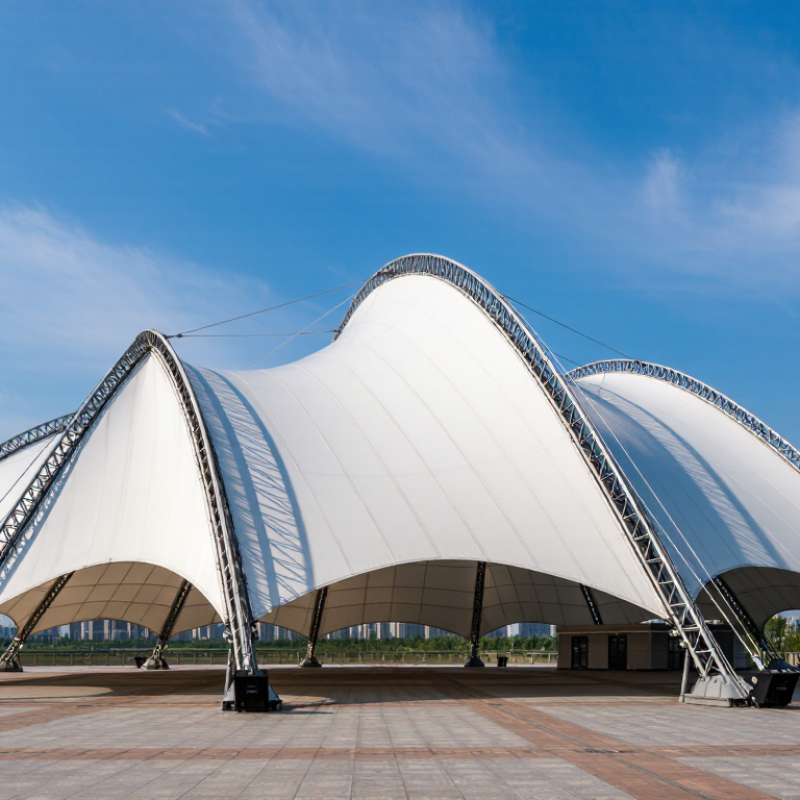
Definition and Core Features of a Membrane Structure Tent
What Is a Membrane Structure Tent and How Does It Work?
A membrane structure tent is a lightweight shelter made from tensioned fabric. Unlike a conventional tent, it relies on engineered force rather than fabric alone. Masts, arches, cables, or edge beams pull the membrane into shape. This tension helps transfer wind, rain, and snow loads toward the ground or supporting foundations. The result is a stable, open-span space with fewer internal columns.
Its core features include a durable coated membrane, carefully designed joints, and a defined drainage system. Fabrics may resist ultraviolet exposure, moisture, tearing, and flame spread, depending on their specification. Many membranes also allow soft daylight through, reducing the need for daytime lighting. The structure can cover dining areas, walkways, event spaces, or temporary work zones. Still, “weatherproof” does not mean maintenance-free. Dust can collect at seams, and poor tension may create water pockets. This is where real inspection matters.
Tips: Check fabric tension after installation and after severe weather. Keep gutters and drainage edges clear. Examine seams, cables, anchors, and connection plates for wear or movement. Ask for load calculations and material test documents before approval. A small flaw may not look serious, but repeated wind movement can enlarge it. In practice, site conditions often differ from the original plan, so experienced technicians should review unusual settlement, ponding, or fabric noise.
How Membrane Tension Creates Stability
What Is a Membrane Structure Tent and How Does It Work?
How Membrane Tension Creates Stability
A membrane structure tent uses a flexible fabric roof supported by cables, masts, arches, or internal air pressure. Unlike a rigid roof, its fabric gains strength through controlled tension. The material may look soft, yet it can resist wind, rain, and moderate snow when properly engineered. Its shape is carefully calculated before installation. Curved surfaces help distribute forces across the entire membrane.
Tension is the key. When workers pull the fabric tightly, it develops prestress. This tension reduces wrinkles and limits unwanted movement. Wind loads then travel through the fabric toward cables, anchors, and supporting frames. A well-tensioned membrane behaves like a stretched drum skin. It does not simply hang there. Small changes matter. If the fabric becomes loose, flutter can develop and repeated movement may weaken connections.
In practical inspections, technicians check anchor points, seams, drainage paths, and fabric tension after severe weather. Water should flow toward planned outlets, not collect in shallow pockets. Snow deserves special attention because its weight can increase quickly. The simple picture is useful, but incomplete. Tension alone cannot correct poor foundations or weak connectors. I have found that installation accuracy often matters as much as material strength. Even a small alignment error can create an uneven load path. Maintenance records should note sagging, corrosion, damaged stitching, and unusual noise during strong winds. A membrane tent can remain stable for years, but only when its engineered tension stays consistent.
How Membrane Tension Creates Stability
For an idealized spherical membrane, the required in-plane tensile stress increases directly with the pressure difference across the fabric. This chart uses the Laplace relationship σ = Δp × r ÷ 2t, assuming a 10 m membrane radius and a 1 mm membrane thickness. Increasing pressure creates greater membrane tension, helping the structure resist deformation and maintain its shape.
Common Applications and Performance Considerations
What Is a Membrane Structure Tent and How Does It Work?
A membrane structure tent uses tensioned fabric to create a lightweight, sheltered space. Steel or aluminum frames carry the main loads. Cables, poles, and anchors keep the fabric under controlled tension. Unlike a conventional tent, its shape helps distribute wind and rain forces across the entire structure. Some systems use PVC-coated polyester, while advanced designs may use PTFE-coated glass fiber fabric. Material choice affects durability, light transmission, cleaning, and cost.
These tents commonly serve outdoor exhibitions, sports courts, wedding venues, restaurants, transport areas, and temporary classrooms. They can cover large areas without many internal columns. This improves sightlines and allows flexible seating or equipment layouts. Emergency teams may also use them for temporary medical stations or storage. A small canopy can protect an entrance, while a larger structure may shelter thousands of visitors. It feels open, but it still needs careful planning.
Performance depends heavily on local conditions. Engineers must assess wind speed, snow loads, soil strength, drainage, and fire-safety requirements. Poor anchoring can turn a well-designed tent into a serious risk. Ventilation matters too, especially when sunlight heats the fabric and crowded spaces raise humidity. Translucent membranes reduce daytime lighting needs, but glare can affect screens and exhibits. Acoustic control is often overlooked. Rain on the roof may sound surprisingly loud. Regular inspections should check seams, tension, anchors, and water pooling. No membrane system is flawless; maintenance budgets and site limitations can change the real outcome.