
China Best Aluminium French Doors Manufacturer for Buyers
Choosing the right China aluminium french doors manufacturer requires more than comparing prices online. Buyers need dependable engineering, consistent materials, clear communication, and evidence of real production experience. A professional supplier should explain alloy grades, thermal-break systems, glass options, surface finishes, drainage design, and hardware performance in practical terms.
Details matter.
During factory evaluation, buyers should request project photos, product samples, test reports, and quality-control records. A serious manufacturer can describe how frames are cut, assembled, sealed, inspected, and packed. Factory visits or live video inspections can reveal useful details, such as organized workshops, protected glass, accurate corner joints, and labeled components. These small signs often matter more than polished marketing language.
Still, no supplier is perfect. Sample quality may not fully represent mass production, and delivery promises can change when specifications remain unclear. Buyers should confirm drawings, tolerances, color references, packaging methods, warranty terms, and after-sales responsibilities before placing an order. Independent testing may also be sensible for large commercial projects or demanding climates.
This guide examines how to identify China’s best aluminium french doors manufacturer for different buyer needs. It considers customization capability, energy efficiency, weather resistance, production capacity, communication, and long-term reliability. The goal is not to promote the cheapest option. It is to help buyers make a careful decision based on verifiable evidence, realistic expectations, and measurable product performance. Good sourcing takes patience. That part is easy to underestimate.
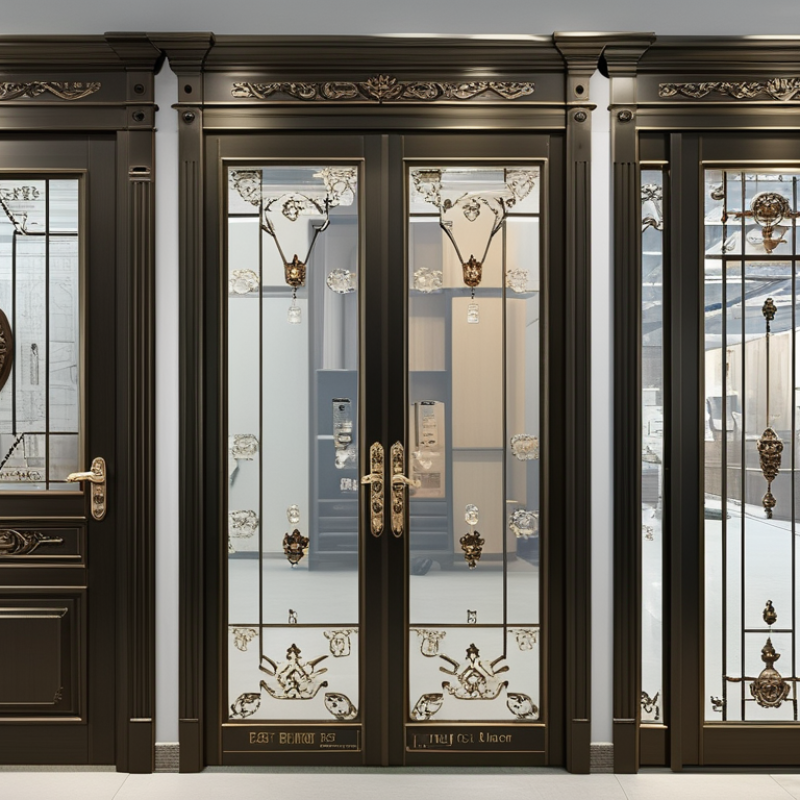
Aluminium French Door Anatomy: 6063-T5 Alloy, Frames, Seals, and Hardware
Choosing a reliable aluminium French door manufacturer starts with understanding its construction, not only its appearance. The 6063-T5 alloy offers a useful balance of strength, corrosion resistance, and clean surface finishing. In practical inspections, I look for straight profiles, consistent wall thickness, and accurate corner joints. Small gaps often reveal poor fabrication.
The frame should support large glass panels without feeling bulky. Thermal breaks can reduce heat transfer through the aluminium sections. However, their performance depends on correct assembly and installation. A seal is not merely a rubber strip. EPDM or similar weather seals should sit continuously around the sash, with tight corners and no crushed sections. Water marks near the bottom rail deserve attention.
Hardware controls daily comfort. Multi-point locks, stainless steel hinges, and adjustable rollers should operate smoothly after repeated testing. Handle movement should feel firm, not loose. Drainage channels also need clear openings, because blocked paths can leave water inside the frame. I have seen attractive doors fail because installers ignored this detail. That is worth remembering. Buyers should request section drawings, alloy and temper documentation, hardware specifications, and test data before placing an order. A capable manufacturer should explain these details clearly, while admitting where performance depends on site conditions, glass selection, or installation quality.
China Best Aluminium French Doors Manufacturer for Buyers - Aluminium French Door Anatomy: 6063-T5 Alloy, Frames, Seals, and Hardware
| Door Anatomy / Dimension | Typical Material or Specification | Function and Performance Contribution | Buyer Inspection Points | Reference / Basis |
|---|---|---|---|---|
| Frame and sash profiles | 6063-T5 extruded aluminium alloy; common wall thickness approximately 1.4–2.0 mm for residential systems, subject to design and structural calculations | Provides the primary structure, corrosion resistance, dimensional stability, and a smooth surface suitable for anodizing or powder coating | Request alloy and temper certificates, extrusion drawings, wall-thickness measurements, and evidence of straight, undamaged profiles | 6063 aluminium alloy is widely used for architectural extrusions; exact profile performance depends on system design |
| 6063-T5 mechanical properties | Typical minimum values for 6063-T5: tensile strength about 140 MPa and yield strength about 97 MPa; values vary by applicable product standard and section size | Offers adequate strength for many architectural door applications when profile geometry, reinforcement, and hardware loads are correctly engineered | Do not evaluate strength by alloy name alone; confirm span, sash weight, wind load, glass weight, and tested deflection limits | Typical published values associated with ASTM B221 / EN 755 product data; confirm the governing local standard |
| Thermal break | Polyamide thermal barrier, commonly 18–34 mm in thermally broken door systems | Reduces heat transfer through the aluminium frame and helps limit interior condensation compared with non-thermally broken construction | Check barrier width, mechanical locking between aluminium and polyamide, corner integrity, and whole-door U-value rather than frame material alone | Thermal performance must be verified by calculation or testing for the complete door assembly |
| Glass panel | Common configurations include 5–6 mm tempered glass, laminated glass, or insulating glass units such as 5 mm glass / 12 mm air or argon space / 5 mm glass | Provides daylight, weather protection, acoustic control, thermal insulation, and safety performance according to the selected build-up | Confirm safety-glazing requirements, spacer type, gas fill if specified, edge clearance, glass thickness, and visible defects | Glass selection should follow local building codes and the door system’s approved glazing limits |
| EPDM weather seals | EPDM rubber gaskets and compression seals; typically installed continuously at the frame, sash, and glazing interface | Limits air leakage and water penetration while accommodating minor movement and temperature changes | Inspect continuous corners, clean joints, correct compression, resistance to cracking, and replacement availability | EPDM is commonly selected for outdoor weather resistance; performance depends on compound quality and installation |
| Drainage and weep paths | Integrated sill channels, pressure-equalization routes, and external drainage openings | Directs incidental water away from the frame and helps prevent water accumulation inside the sill | Verify unobstructed drainage holes, sill slope, end dams, corner seals, and compatibility with the installation substrate | Water resistance is a property of the complete tested assembly, not the aluminium profile alone |
| Hinges | Adjustable hinges in corrosion-resistant aluminium, zinc alloy, or stainless steel; commonly rated for the calculated sash load | Supports the door leaf and allows alignment adjustments for smooth operation and uniform seal compression | Check load rating, adjustment range, fastener engagement, hinge quantity, and resistance to coastal corrosion where relevant | Hinge selection must account for glass weight, sash dimensions, opening frequency, and wind exposure |
| Multipoint locking system | Latch with multiple locking points, commonly including hooks, rollers, or shoot bolts; stainless-steel or corrosion-protected components are preferred for humid environments | Improves security and distributes gasket compression along the door perimeter | Confirm cylinder format, emergency function if needed, smooth operation, lock alignment, test evidence, and spare-part support | Security rating and corrosion classification depend on the complete hardware set and applicable standard |
| Handle and cylinder | Lever handle with aluminium, stainless-steel, or zinc-alloy components; profile cylinder dimensions selected for the lock body and door thickness | Provides user control and interfaces with the locking mechanism | Check fixing screws, spindle size, cylinder projection, key operation, finish durability, and child-safety options where required | Hardware dimensions must be coordinated with the selected profile and lock system |
| Surface finish | Powder coating or anodizing; common architectural powder-coating thickness is approximately 60–120 μm, subject to specification | Improves appearance and protects the aluminium surface from weathering and general corrosion | Specify color reference, gloss level, coating thickness, adhesion, impact resistance, and pretreatment process | Finish requirements should identify the applicable architectural coating or anodizing specification |
| Common door dimensions | Typical residential opening heights are approximately 2,000–2,400 mm; widths vary by configuration, glazing, hardware, and structural limits | Determines sash weight, hinge loads, hardware selection, glass size, and installation requirements | Obtain approved shop drawings and verify rough opening, frame size, sill condition, tolerances, and maximum sash dimensions | Dimensions are project-specific and should not be selected from generic size ranges alone |
| Performance verification | Whole-door testing or engineering documentation for air permeability, water tightness, wind resistance, thermal transmittance, and operating force | Confirms that frame, glass, seals, hardware, drainage, and installation details work together as one system | Request reports matching the final profile, glass, hardware, dimensions, and configuration; check test standards and specimen size | Performance classifications vary by region and test method; compare equivalent standards only |
Related Posts
-
How to Easily Repair Home Windows and Save Money?
-
Why Are Home Windows Important for Energy Efficiency?
-

How to Choose the Best Residential Window Replacement for Your Home
-
10 Best Tips for Sliding Door Installation You Should Know?
-

Why You Should Take Advantage of Window Deals Today?
-
Enhance Your Home Aesthetic with Energy Efficient Patio Doors for Ultimate Comfort